
News/General
Your Limestone Aggregate Questions Answered
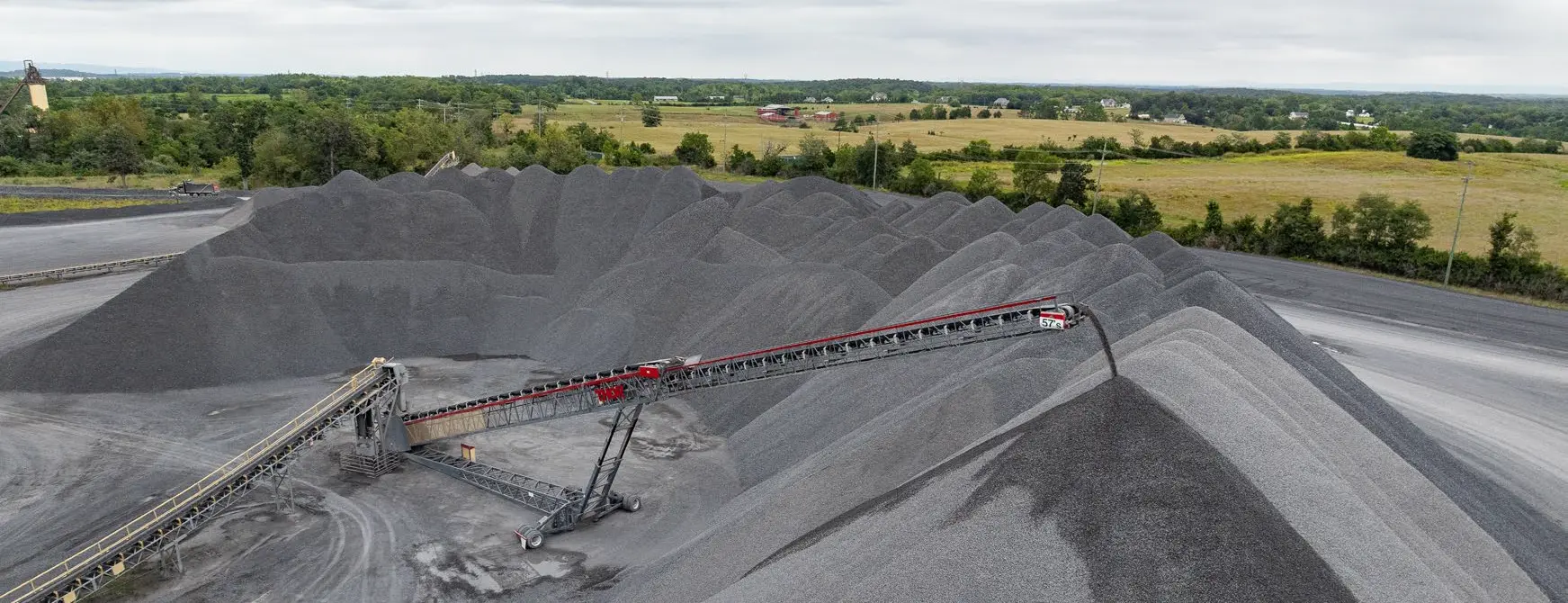
Construction aggregates play a critical role in road construction, site development, parking lots, foundations, drainage systems, and infrastructure projects. Whether you’re evaluating material options, estimating quantities, or planning deliveries, understanding aggregate selection can help improve project performance and keep projects on schedule.
Below are answers to some of the most common questions about construction aggregates and their applications.
Construction aggregates are granular materials used to provide strength, stability, drainage, and structural support in construction projects. Common aggregate materials include crushed limestone, gravel, sand, and recycled materials.
Aggregates are used in:
- Road and highway construction
- Commercial site development
- Building foundations
- Parking lots
- Drainage systems
- Utility projects
- Carmeuse Internal
- Concrete production
- Industrial facilities
Because different projects require different performance characteristics, aggregate products are produced in various sizes and gradations.
Limestone and concrete serve different purposes in construction, so one is not necessarily stronger than the other.
Crushed limestone is an aggregate material commonly used for road bases, driveways, parking lots, and foundations because it compacts well and provides excellent load-bearing support. Concrete is a manufactured building material used to create durable slabs, pavements, sidewalks, foundations, and other structural elements.
Rather than competing with one another, crushed limestone and concrete often work together. Crushed limestone is frequently used as a stable base beneath concrete to help support loads and reduce settlement. Limestone aggregate can also be used as an ingredient in concrete mixes, depending on the application.
#57 stone is a clean, crushed aggregate with little to no fines. Because water can flow through it, it’s commonly used for drainage applications, backfill, concrete production, and decorative stone projects.
Crusher run is a blend of crushed stone and stone fines. It is available in different sizes and gradations depending on the application. The fines help the material compact into a dense, stable surface, making it a popular choice for driveways, road bases, parking areas, and foundation preparation.
As mentioned above, clean aggregates such as #57 stone are commonly used for drainage applications because they allow water to move freely through the material rather than trapping moisture.
Drainage aggregates are commonly used for:
- Foundation drainage
- Retaining walls
- Utility trenches
- Septic systems
- Stormwater management projects
Choosing the right drainage aggregate can help improve water management and reduce future maintenance concerns.
Yes. Crushed limestone is widely used as a base material for roads, parking lots, building pads, foundations, and other construction projects.
When properly installed and compacted, crushed limestone provides excellent load-bearing support and long-term stability. It is often selected because of its durability, availability, and ability to create a strong foundation for the materials installed above it.
The right aggregate depends on your project’s requirements, including drainage, load-bearing capacity, compaction needs, and intended use. For example, clean stone is often selected for drainage applications, while dense-graded aggregates are commonly used for road bases and surfaces that require compaction. Larger stone may be used for erosion control, and specialty aggregates may be chosen for decorative or site-specific applications.
The amount of material needed depends on the size of the area, desired depth, and aggregate selected. Ordering the correct product and quantity helps avoid project delays, unnecessary costs, and material shortages.
If you’re unsure which aggregate is right for your application, our team can help recommend a material and estimate the tonnage required for your project.
Yes. Customers can pick up aggregate using dump trucks and dump trailers designed to safely haul aggregate materials.
For safety reasons, we do not load pickup trucks or other vehicles not intended for hauling aggregate. Locations reserve the right to refuse loading if a vehicle is deemed unsafe or unsuitable for the material being transported.
Minimum order quantities vary by location, material type, and whether the material will be picked up or delivered. Contact your local Carmeuse Construction location for current availability, delivery options, and order requirements.
Before delivery, ensure trucks can safely access and exit the site and that a designated unloading area is clearly identified. Ground conditions should be stable enough to support loaded delivery vehicles.
Preparing the site in advance helps promote a safe, efficient delivery process and can help minimize delays once material arrives.
Still Have Questions?
Selecting the right aggregate starts with understanding your project’s goals. From drainage stone and driveway materials to commercial construction aggregates, choosing the right product can improve performance, reduce maintenance, and help projects stay on schedule.
If you’re not sure which material is right for your application, contact our team. We’re happy to help you find the best solution for your project.