
Heavy Civil Construction
Infrastructure
Why Aggregates Matter in Concrete and Why Limestone Leads the Way
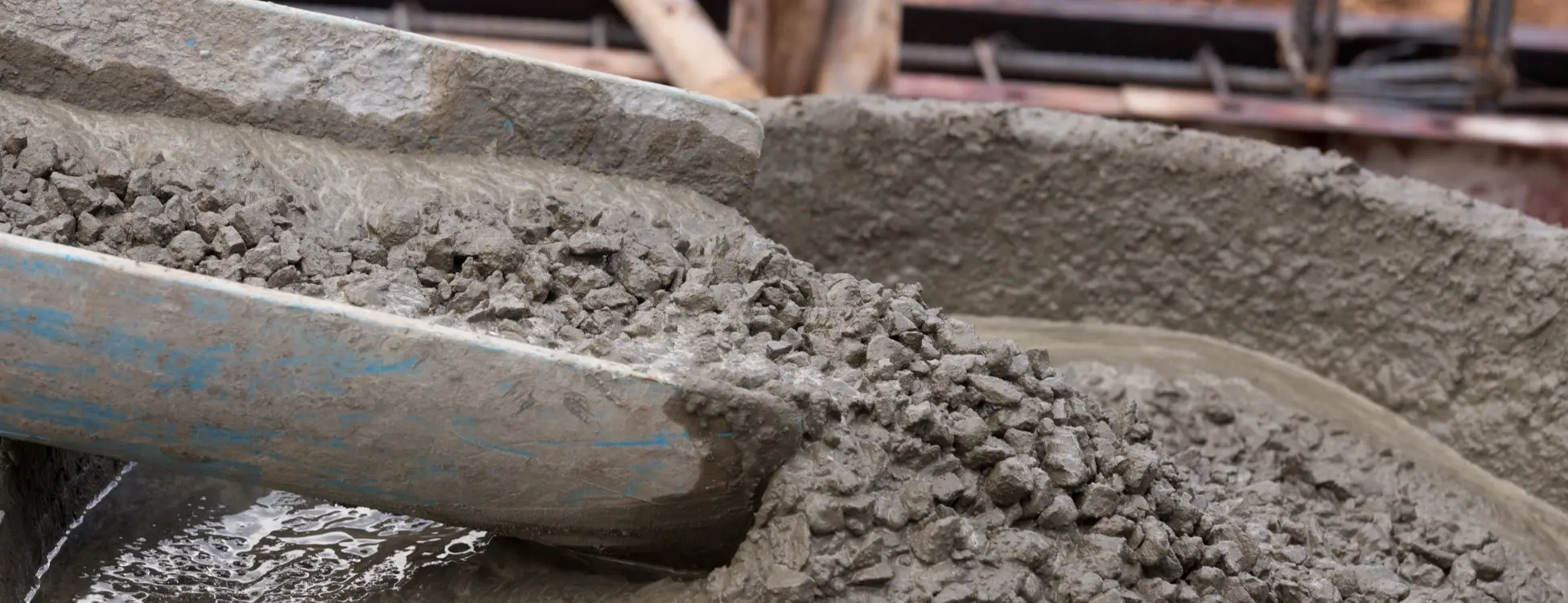
Concrete is the world’s most widely used construction material, and aggregate is its foundation. Aggregates typically make up 60–80% of concrete’s volume and 70–85% of its weight, meaning its properties directly influence how concrete performs in the field. Aggregates are not an inert filler; their mineralogy, shape, gradation, durability, and interaction with cement paste fundamentally determine concrete strength, stiffness, workability, and long‑term durability. As an aggregate producer, we recognize that the performance of concrete begins with the geology at the quarry face. Whether coarse or fine, the right aggregate reduces cement paste demand, improves the mechanical response of the composite, and enhances long‑term structural performance.
From infrastructure and industrial construction to commercial and residential projects, engineered aggregates are essential for producing high-performance concrete in pavements, foundations, and structural applications across every market we serve.
Types of Aggregates and Their Characteristics
Aggregates originate from three primary rock types:
- Igneous (granite)
- Sedimentary (limestone)
- Metamorphic (marble or quartzite)
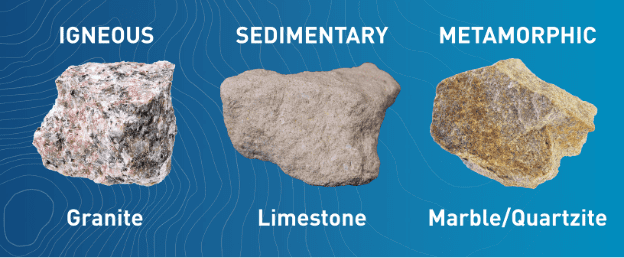
Each rock type brings unique physical characteristics that influence concrete behavior. Properties like shape, density, surface texture, porosity, and mineralogical structure all play a role in how well aggregates bond with cement paste and how finished concrete performs.
While high‑strength igneous aggregates like granite may offer high compressive strength in certain mix designs, they are not always the most practical solution. Crushed limestone, a sedimentary carbonate aggregate, offers a balance of engineering performance, durability, economic efficiency, and sustainability, making them well-suited for a wide range of construction applications.
Chemical Stability and Reactivity Advantages
From a performance standpoint, limestone aggregates are exceptionally consistent, chemically stable, and lower in reactivity than many siliceous aggregates. This minimizes the risk of deleterious alkali–carbonate interactions between aggregate and cement and reduces variability in mix behavior across concrete producers. As a long-standing aggregate producer, we have sites with decades of proven field performance.
Limestone’s mineral structure, dominated by calcium carbonate, has been shown in laboratory studies to interact beneficially with cement hydration products. Fine limestone particles provide nucleation sites that accelerate early hydration and improve paste–aggregate bonding.
Particle Shape and Workability
Another key advantage of limestone is its superior particle shape consistency when crushed. Limestone tends to fracture into more cubical and equidimensional particles, which enhances packing density and reduces void content. Cubical particles lower paste requirements, resulting in better concrete workability and overall mix efficiency. This also reduces cement consumption, which is an important benefit given that cement is the costliest and most carbon‑intensive component of concrete. This relationship between aggregate shape, paste demand, and workability is well established in concrete materials research and forms the basis for modern aggregate shape specifications.
Aggregates with rounded or elongated forms, such as river gravel, often underperform in concrete due to poor interlock and reduced bond strength, an effect observed in controlled fracture‑mechanics studies comparing granite, limestone, and river gravel.
Density and Yield Benefits
Limestone also offers a density advantage over igneous aggregates such as granite, including:
- Lower specific gravity
- Better yield
- More volume of aggregate per ton delivered
This increases the efficiency of concrete production, reduces transportation energy per unit volume, and enhances cost‑effectiveness for producers, ready‑mix suppliers, and contractors.
Studies comparing granite, limestone, and marble aggregates consistently show limestone’s favorable bulk density and void ratio characteristics relative to harder, denser igneous rock.
A Reliable Foundation for Durable Concrete
When all factors are considered, lower reactivity, cubical particle shape, yield efficiency, consistent performance, and favorable interactions with cement paste, limestone aggregates offer a robust and reliable foundation for durable, high-quality concrete.
As producers, we invest in geological evaluation, controlled blasting, advanced crushing technologies, and rigorous quality testing to ensure that every ton of our aggregate supports the structural integrity, performance, and long-term value of the concrete they become part of.In an era where sustainability, durability, and lifecycle performance matter more than ever, selecting the right construction aggregate is not merely a materials choice, it is a structural decision that begins at the quarry.
Considering Limestone aggregate for your project? We’re here to help you navigate material selection, performance requirements, and supply needs with confidence. Let’s build together. Contact us today.