
News/General
How Aggregates Like #57 and #8 Get Their Names: A Practical Guide to AASHTO Size Standards
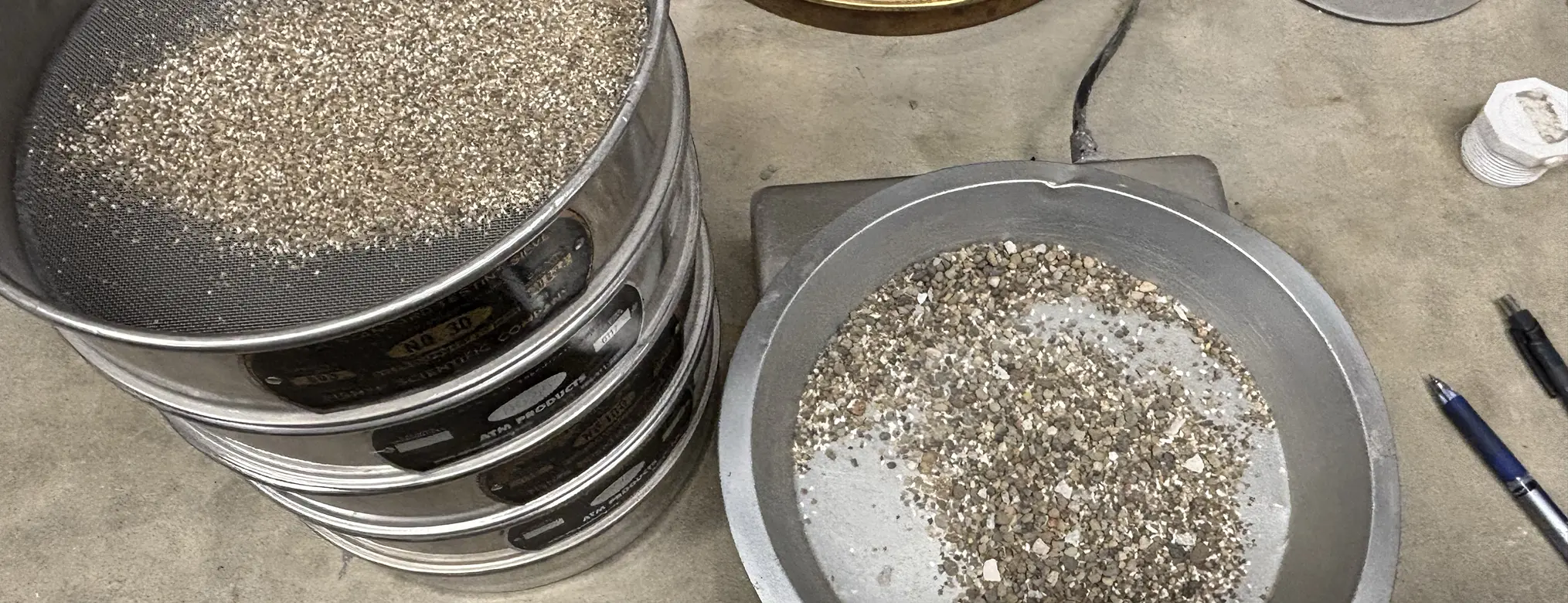
If you’ve ever ordered aggregates for a construction project, you’ve probably come across or heard numbers like #57s, #4s, or #8s. But did you ever wonder what those numbers mean? We can assure you that they are not random. These number designations come from the AASHTO M43 specification, which defines aggregate size designations and gradation ranges for coarse aggregate and screenings used in construction.
AASHTO, short for the American Association of State Highway and Transportation Officials, is a nonprofit organization that represents transportation agencies in all 50 states, including Michigan, Ohio, Virginia, Tennessee, and Alabama. One of AASHTO’s key roles is developing national standards for highway and transportation infrastructure, including specifications for construction materials like aggregates.
The number assigned to an aggregate allows contractors, engineers, and suppliers to speak the same language and quickly identify the size range and intended use of a material. Understanding these designations can make it easier to select the right aggregate for your project and communicate clearly with suppliers.
Understanding the Need for Aggregate Size Standards
An aggregate’s size and material type affect how it will perform when subjected to things like weather or the stress of anticipated loads. Particle size distribution, also called gradation, is one of the most important features that affect how an aggregate will work in pavement material and structures. For example, in asphalt, gradation can affect stiffness, stability, durability, permeability, workability, and moisture resistance. In concrete, the gradation can affect durability, porosity, workability, water demand, strength, and shrinkage.
Aggregates like crushed stone and gravel are used to build roads, create firm foundations, and to complete the mix designs for concrete and asphalt. AASHTO size designations help to standardize what material shows up on the jobsite or at the plant. Instead of saying “I need a medium-sized stone” or “I need a small clean rock,” a project spec can call for a specific stone material like AASHTO #57 or AASHTO #8 and the crew can trust that the material that arrives on site will meet the needs of their project.
How AASHTO Size Designations Work
AASHTO aggregate gradations are verified through a laboratory test called AASHTO T27, also known as sieve analysis. For reference, a sieve is a heavy-duty metal screen with specific sized square openings. During the test, an aggregate sample is placed in a stack of sieves arranged from the largest opening at the top to the smallest opening at the bottom. The stack is then shaken, allowing smaller particles to pass through while larger particles remain on the appropriate screens. Technicians weigh the material retained on each sieve to determine the distribution of particle sizes. The results of this test establish the material’s gradation, or the range of particle sizes within the aggregate.
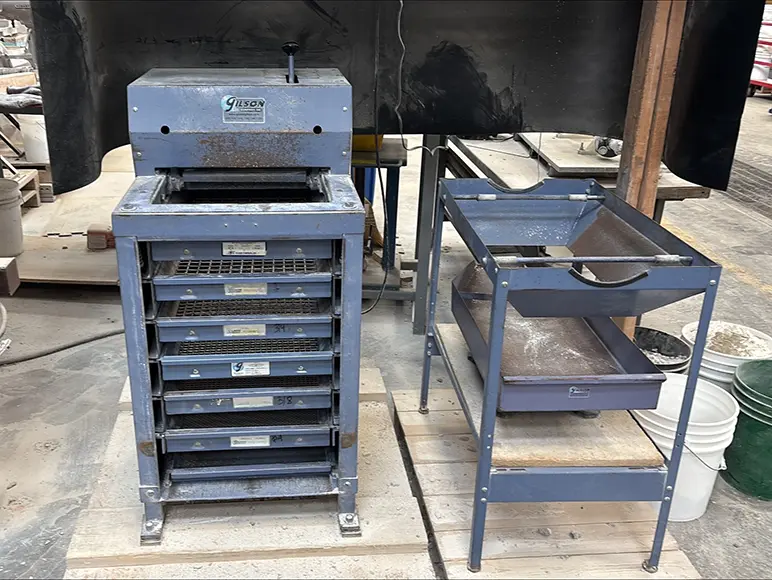
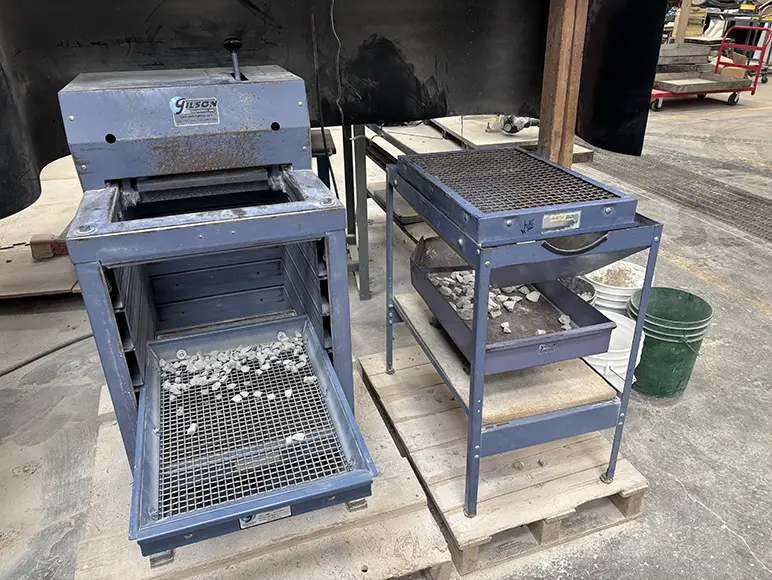
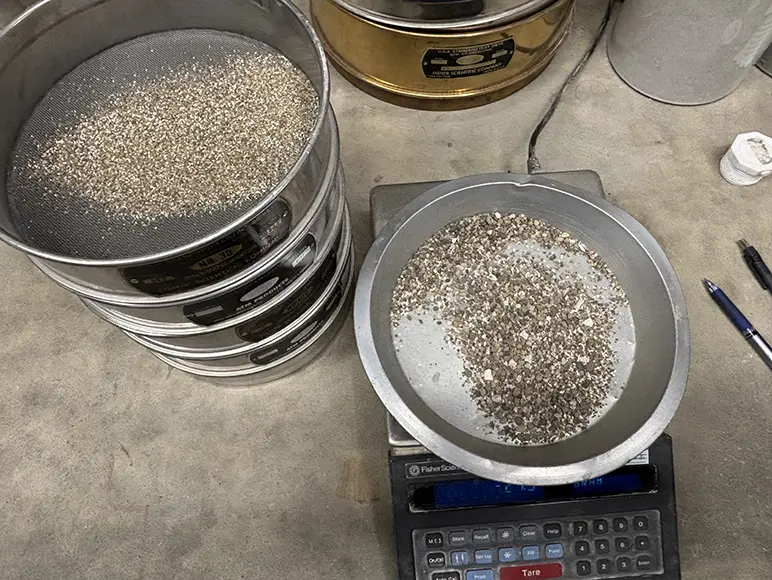
Put simply, the AASHTO size number indicates the general size range of an aggregate. Sizes #1 through #10 are based on gradation ranges shown in AASHTO M43. #1 is among the largest standard aggregate sizes, while #10 is among the smallest screening sizes. Multi-digit designations generally represent blends of aggregate sizes. For example, #57 stone is a blended sized designation that combines material from the AASHTO #5 and #7 size ranges.
Common AASHTO Aggregate Sizes
It should be noted that AASHTO names are national standards, but local names for aggregates can vary. A supplier, contractor, or state DOT may use region-specific names in project specifications. To help customers compare terminology, we have compiled several DOT gradation chart references for the states where we operate on our Resources page.
Grouping Aggregates into Classes
In addition to the AASHTO naming convention, aggregates can be categorized into several different classes such as dense grade, clear grade, sands, and fines.
Dense Grade
Dense grade can contain a wide range of particle sizes: large stones, medium stones, small stones, and fines. The smaller particles fill the spaces between larger stones, which help the material compact into a firm, stable layer. Dense grade is often used for road bases, driveways, foundations, pads, and other places where strength and compaction matter.
Clear Grade
Clear grade, often referred to as open-graded aggregate, contains little to no fines. That leaves open spaces between stones, which lets water move through. This makes clear grade a good choice for drainage layers of a pavement structure, drainage systems, pipe bedding, and areas where water needs a path to escape. These materials drain well but do not compact into a dense mass the same way dense graded materials do.
Sand
Sand consists of particles that generally pass the No. 4, or 4.75 mm sieve and includes natural sand, manufactured sand, or a combination of the two. Sand is one of the most common fine aggregates.
Fines
Fines are the smallest particles in an aggregate blend. They can help fill spaces between larger stones, which makes the material compact better. It should be noted that too many fines can reduce drainage and permeability. Fine content is often measured by washing material through a very small sieve, such as the No. 200 sieve.
AASHTO Names are a Starting Point, Not the Whole Story
AASHTO designations are helpful because they give contractors, engineers, and suppliers a common way to describe aggregate size and gradation. But the number alone does not tell the whole story. Project specifications, state DOT requirements, source properties, and performance testing can all influence which material is right for a job. That is why it is important to look beyond the name and think about what the aggregate needs to do. A dense graded material may be the right choice when strength and compaction matter, while a clear graded material may be better when drainage is the priority. Sands and fines can also affect workability, stability, and how a finished mix performs.
Before ordering, always confirm the material requirements in your project specification. AASHTO size designations are a strong starting point, but local naming conventions and project-specific quality requirements can affect what product is acceptable for use.
To help you compare aggregate sizes and gradations, we’ve compiled regional gradation charts for the materials we supply. View our charts for the AASHTO Standard, Michigan, Ohio / Western Pennsylvania, and Virginia markets.
In the end, aggregate names are meant to make material selection easier, not more confusing. Understanding numbers like #57, #8, and #10, along with terms like dense grade, clear grade, sand, and fines, helps you ask better questions and choose materials with more confidence. If you have questions about which product is right for your project, please reach out to our knowledgeable sales staff through our regional pages or through our contact form.
Frequently Asked Questions
What is AASHTO #57 stone used for?
AASHTO #57 stone is a commonly used construction aggregate size made from a blend of #5 and #7 stone sizes. It is often used for drainage applications, concrete mixes, road base layers, pipe bedding, and other projects that need a clean, durable crushed stone with consistent gradation.
What do aggregate size numbers like #57, #8, and #10 mean?
Aggregate size numbers such as #57, #8, and #10 refer to AASHTO size designations used to describe the general particle size range and gradation of crushed stone, gravel, and screenings. These standardized aggregate names help contractors, engineers, and suppliers choose the right material for construction projects and concrete and asphalt mix designs.
What is AASHTO M43 for aggregates?
AASHTO M43 is the national specification that defines standard aggregate size designations and gradation ranges for coarse aggregate and screenings.
How is aggregate gradation tested?
Aggregate gradation is tested through AASHTO T27, also called sieve analysis. In this test, a sample of aggregate is passed through a stack of sieves with different square opening sizes. The results show the distribution of particle sizes in the material, which helps confirm whether the aggregate meets the required specification.
What is the difference between dense grade aggregate and clear grade aggregate?
Dense grade aggregate contains a mix of large stones, small stones, and fines that compact into a strong, stable base layer for roads, driveways, pads, and foundations. Clear grade aggregate, also called open-graded aggregate, contains little to no fines, which allows water to drain through the material more easily.