

Project BACKGROUND
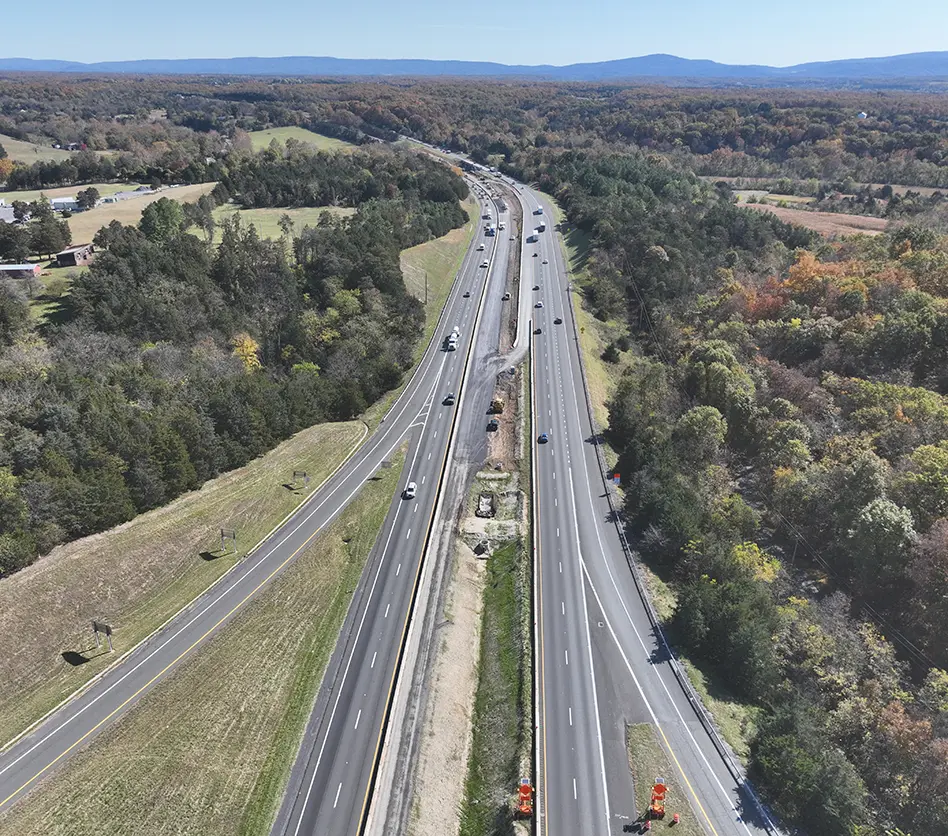
VDOT is widening I‑81 southbound between mile markers 295.4 and 299.6, an important four‑mile stretch between Strasburg, the Shenandoah/ Warren County line, and the I‑66 interchange. This improvement is part of the statewide Corridor Improvement Program (CIP), created to enhance capacity, reduce congestion, and improve safety along one of Virginia’s most heavily traveled freight corridors.
The project includes adding a third southbound travel lane, constructing a new 10–12 ft paved median shoulder, replacing the Cedar Creek bridge, and installing a new superstructure on the CSX Railroad bridge. A one‑mile sound wall is also being constructed along the northbound side to mitigate noise impacts in nearby communities. With more than 29,000 vehicles traveling this segment each day (and traffic expected to rise significantly) maintaining schedule and public safety is central to the project’s success.
The CHALLENGE
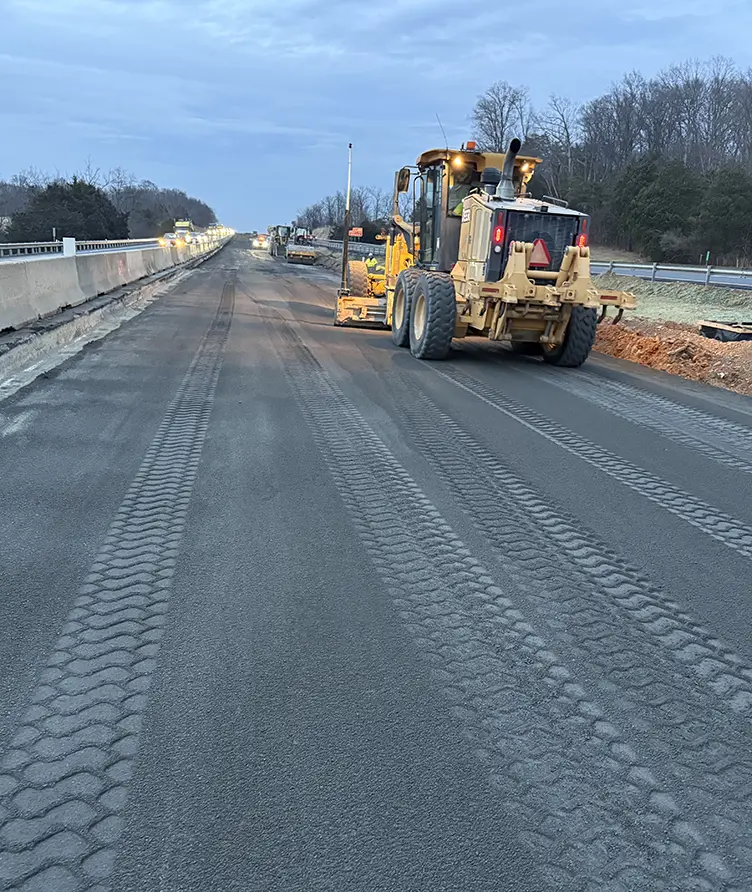
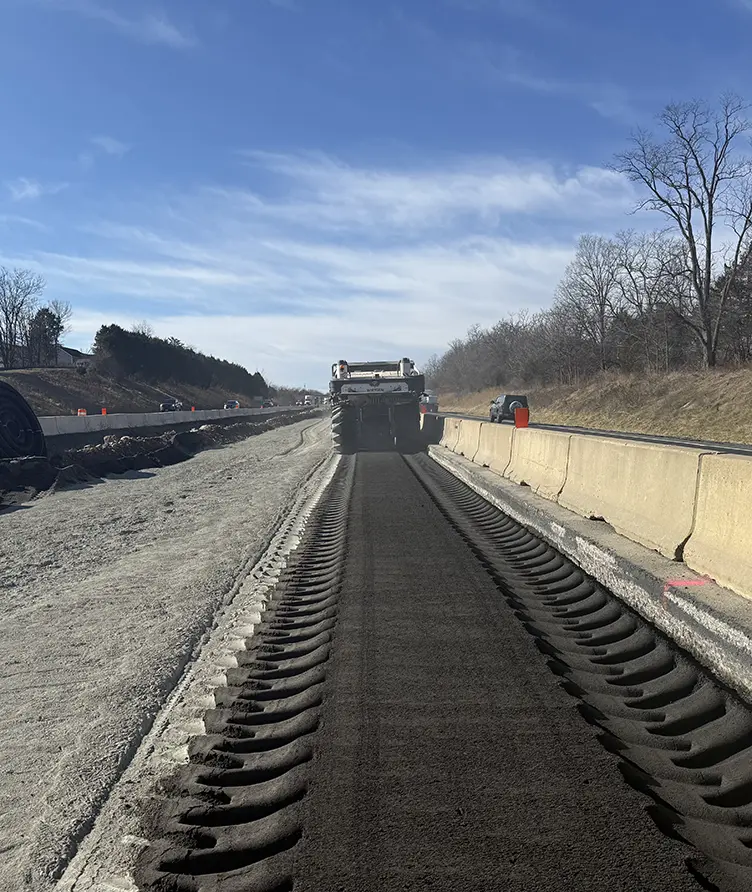
Working on an active interstate with night‑only lane closures creates significant logistical challenges. Temperature‑sensitive activities such as asphalt paving, full‑depth reclamation (FDR), and cement‑treated aggregate placement have to be carefully timed around weather conditions, and limited access to the median required the construction of temporary access roads to reach work areas and deliver materials. Heavy truck volumes, which make up about a quarter of daily traffic, also make it difficult for construction vehicles to merge safely at night.
The corridor contains unsuitable soils that need to be undercut and replaced, adding complexity to the work. The project also requires close coordination with VDOT, CSX, and multiple subcontractors while advancing through a tightly sequenced five‑phase construction plan.
The SOLUTION
We are partnered closely with Shirley Contracting Company, LLC to deliver a reliable materials supply plan that meets VDOT specifications and keeps pace with the project’s needs. Carmeuse is supplying all required aggregates, including #57s, riprap, #8s, and more than 50,000 tons of No.10 screenings used as the base for the FDR/CTA process. Consistent gradation and quality are essential to support the contractor’s cement‑treated aggregate requirements.
IMPLEMENTATION
The project began in January 2025, with winter weather and limited access affecting early shoulder work and temporary widening. As construction advanced through shoulder strengthening, median excavation, bridge sequencing, and pavement reconstruction, we adjusted delivery volumes and timing to match shifting work zones. Through 2025 and into 2026, we supplied base stone, drainage materials, and specialty aggregates to support underdrains, shoulder construction, and bridge foundations, coordinating closely with nighttime paving and FDR operations to maintain material quality. Strong planning and communication kept trucking efficient and allowed our supply to scale as work progressed from temporary widening to full median reconstruction and sound wall foundation work.
RESULTS
Although the project is still underway and scheduled for completion in 2028, major milestones have already been reached, including installation of the Cedar Creek cofferdam, substantial shoulder improvements, and ongoing median widening. Reliable delivery of base stone, drainage stone, riprap, and FDR screenings has supported uninterrupted nighttime production and kept the contractor aligned with VDOT’s phased sequencing. Our dependable supply, short haul distances, and close coordination helped crews exceed nightly production targets and maintain momentum in challenging conditions. We continue to help maintain project momentum as the work advances into its next phases.